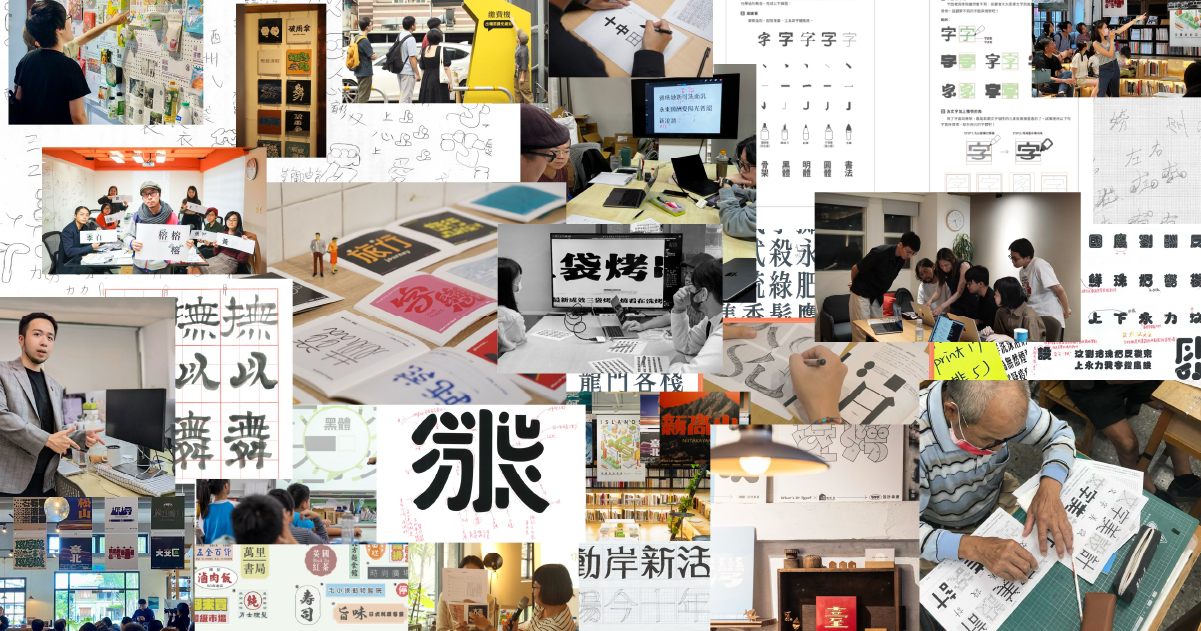
The landscape of Traditional Chinese type design in Taiwan offered little structural support for anyone who wanted to enter the field. A complete Chinese typeface requires around 14,000 glyphs, making it impractical for schools to teach type design at scale; most design programs covered logotype or typesetting at best, while the craft of typeface design itself remained largely confined to a handful of studios.

Used primarily in Taiwan, Hong Kong and Macau, the Traditional Chinese market was structurally small, and consumer awareness around font licensing was historically low. Between 2005 and 2015, only five digital typefaces were released exclusively for the Taiwan market, while the two largest local foundries had shifted their business focus to Japan. If you needed a font you couldn’t afford, there were always mysterious CDs circulating in schools and offices.
What the environment lacked was not designers alone, but the support system of a market. To build a healthy ecosystem, instead of starting within the design community, justfont started from those who were not designers. The people who learn to notice type, care about it, and eventually pay for it are the ones who make it possible for designers to exist at all. Without them, there is no market; and without a market, there is no designer.
This logic has shaped every initiative justfont has built over the past decade.
Building the Foundation — Reaching Non-Designers
Content Strategy
justfont’s first move was not to launch a design course. It was to start a blog.
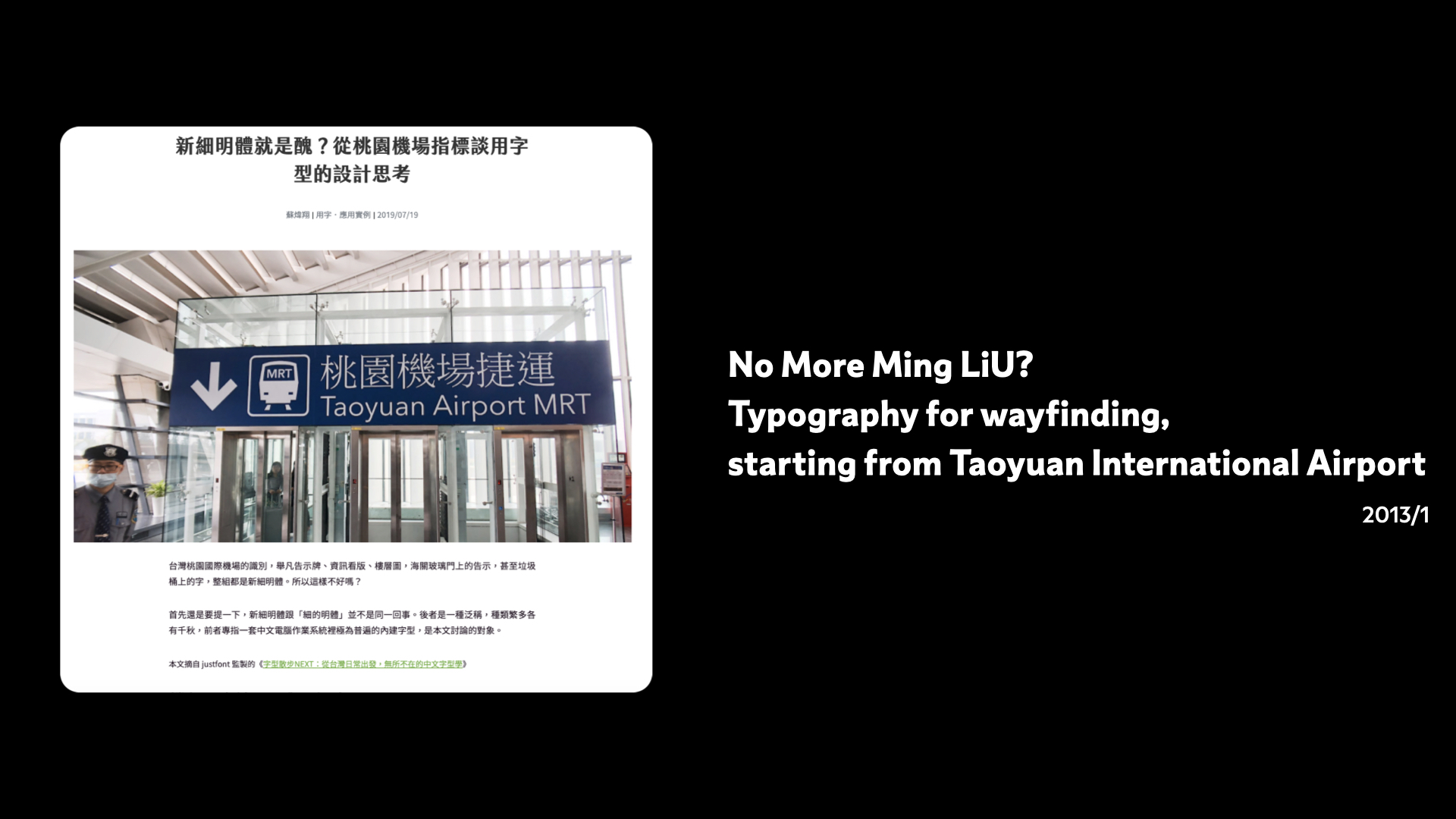
Since 2012, we have been publishing articles about typography for audiences who were not already experts—graphic designers, students, and people who had never given much thought to fonts at all. The content spans everyday signage, font licensing basics, typographic history, legibility, and the kind of quietly obsessive topic that turns out to have broad appeal: one article about typography in airport environments from 2013 still resurfaces on social media every few months.
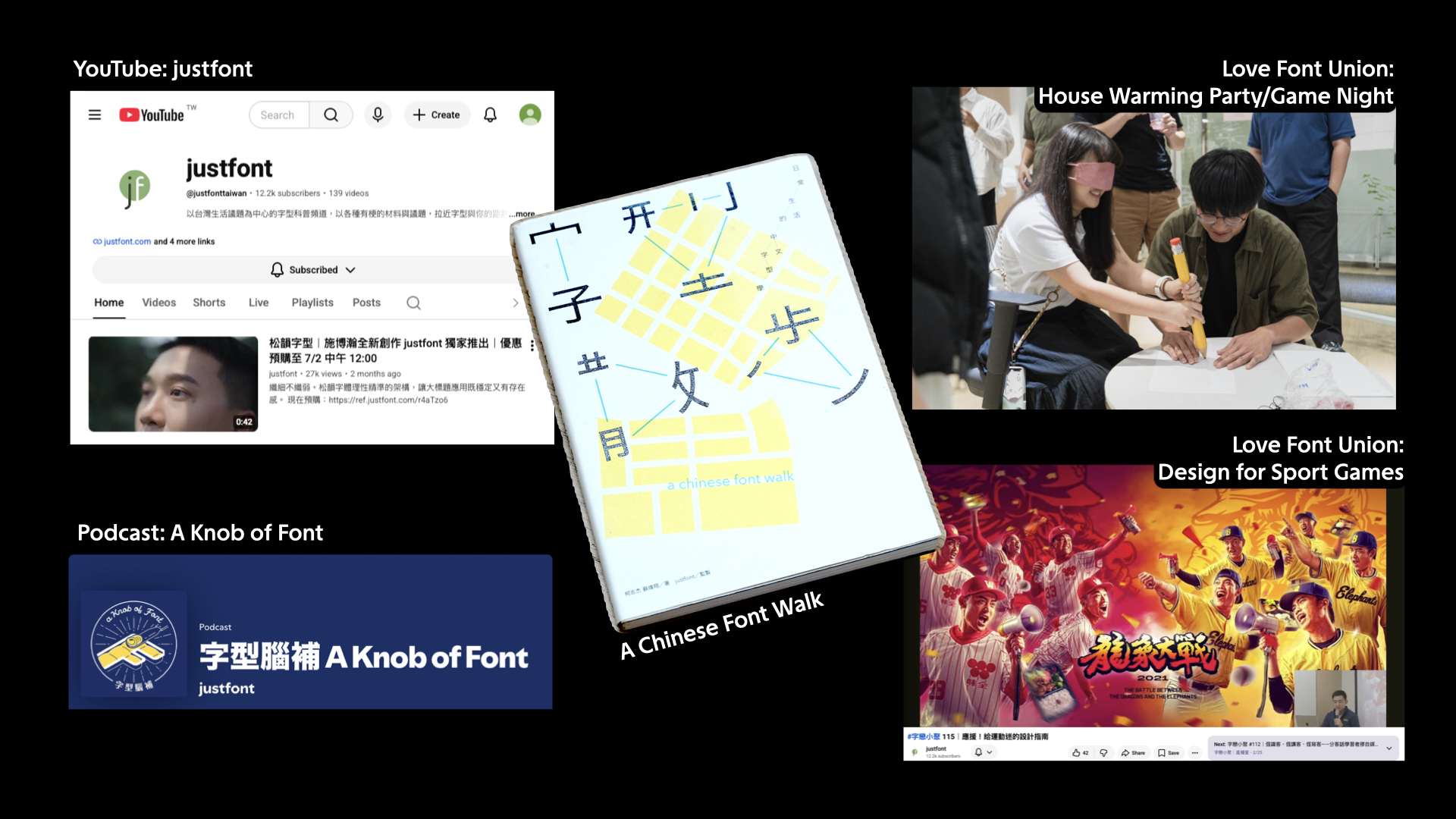
This content is distributed across multiple platforms—a podcast, a YouTube channel, and a monthly gathering where speakers share perspectives ranging from historical printing methods to designing type for K-pop aesthetics. These are all free to the public, while some are licensed under CC BY-NC-ND 4.0.
The distinction between free and paid content is determined by depth and format. Conceptual introductions, historical context, and general typographic literacy belong on accessible platforms. More technical material, including structured instruction on typeface construction and professional software use, is offered through paid courses. The line follows the level of commitment the content asks of its audience.
This strategy has produced measurable results. Short-form video content about typography reaches nearly a hundred times more viewers than articles about design logic, reflecting the difference between content designed for curious outsiders and content designed for practitioners. Handwritten fonts have shown consistent sales growth in recent years, with most new customers beginning with a single handwriting-style font before returning for text typefaces, a pattern that traces directly to content that introduced them to type in non-technical terms.
A campaign pairing typeface recommendations with personality types was widely shared online. Some said that the fonts recommended matched what they had already been buying, without having understood why.
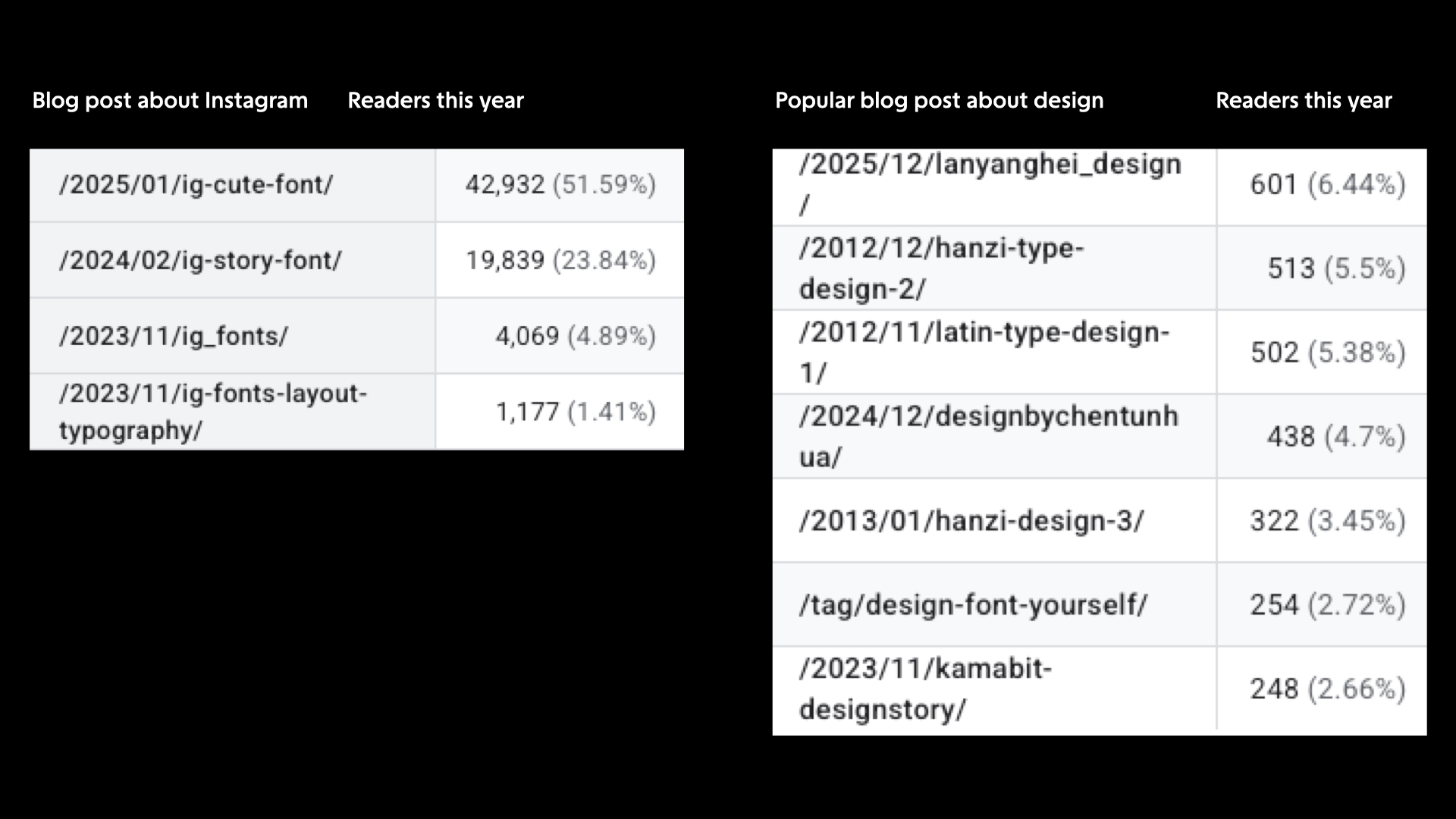
Building an environment that begins with non-designers, as it turns out, works.
Outreach and Education
Beyond digital content, justfont has maintained a consistent presence in physical and institutional contexts. We accept almost every speaking invitation we receive, as they may be from corporations, museums, community centres, and university departments. These events are not for recruitment—we seldom demonstrate with our own products, but with the most commonly seen typefaces and free fonts. They are investments in a broader public understanding of why type matters.
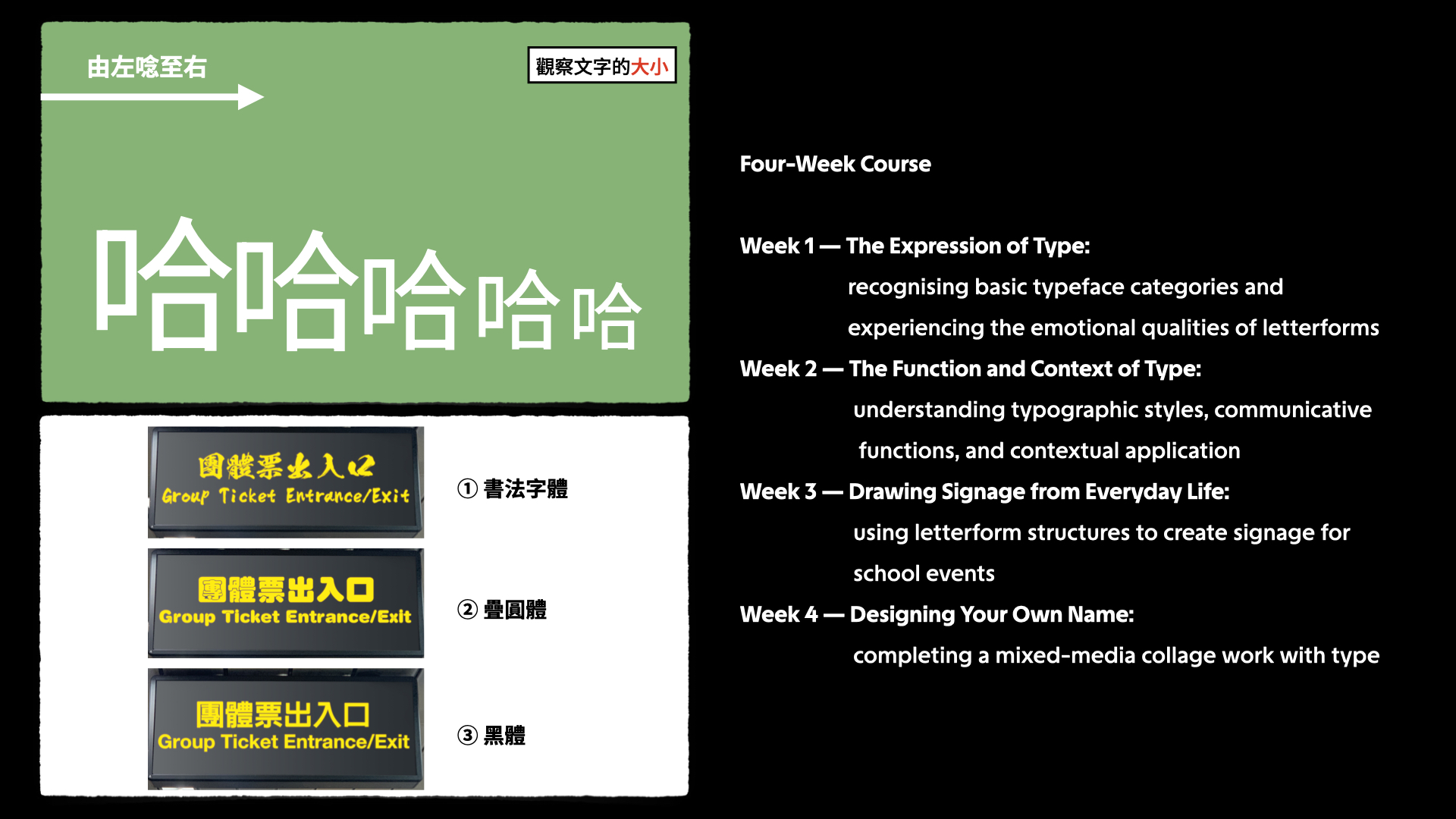
A free 8-hour lesson plan for primary and secondary school teachers, released in 2022, is designed for educators without a design background and has since been adopted across classroom and home settings. We have collaborated with organisations focused on aesthetic education and with NGOs where design literacy intersects with other fields. For those aiming to go deeper, we offer free consultations to university students working on graduation projects related to type.
All of these are long-term investments in the environment.
The effect is difficult to quantify, but occasionally becomes visible—we now regularly meet designers who tell us they grew up reading justfont’s articles. Some of them are colleagues at justfont today. When the younger generation encountered our content as teenagers, neither they nor we could have anticipated that typography would become central to their lives. That is the part of ecosystem-building that is hardest to plan for, yet perhaps the most consequential.
The Path — Courses and Community Practice
For those who want to go further than reading, justfont offers structured instruction.
Type Design Courses
justfont has been running type design courses taught by our own designers since 2014. In-house instructors bring curriculum built from professional practice, not from a standardised syllabus. The structural logic of Hanzi character design, the decisions behind stroke construction, the visual judgements that experienced designers make intuitively but rarely articulate—these are the things the courses are designed to surface and transmit.
Foundation Course
The foundation course introduces type design through direct practice rather than theory alone. Students work primarily with pencil and Illustrator, building familiarity with the fundamental tools of the craft before moving to dedicated type design software.
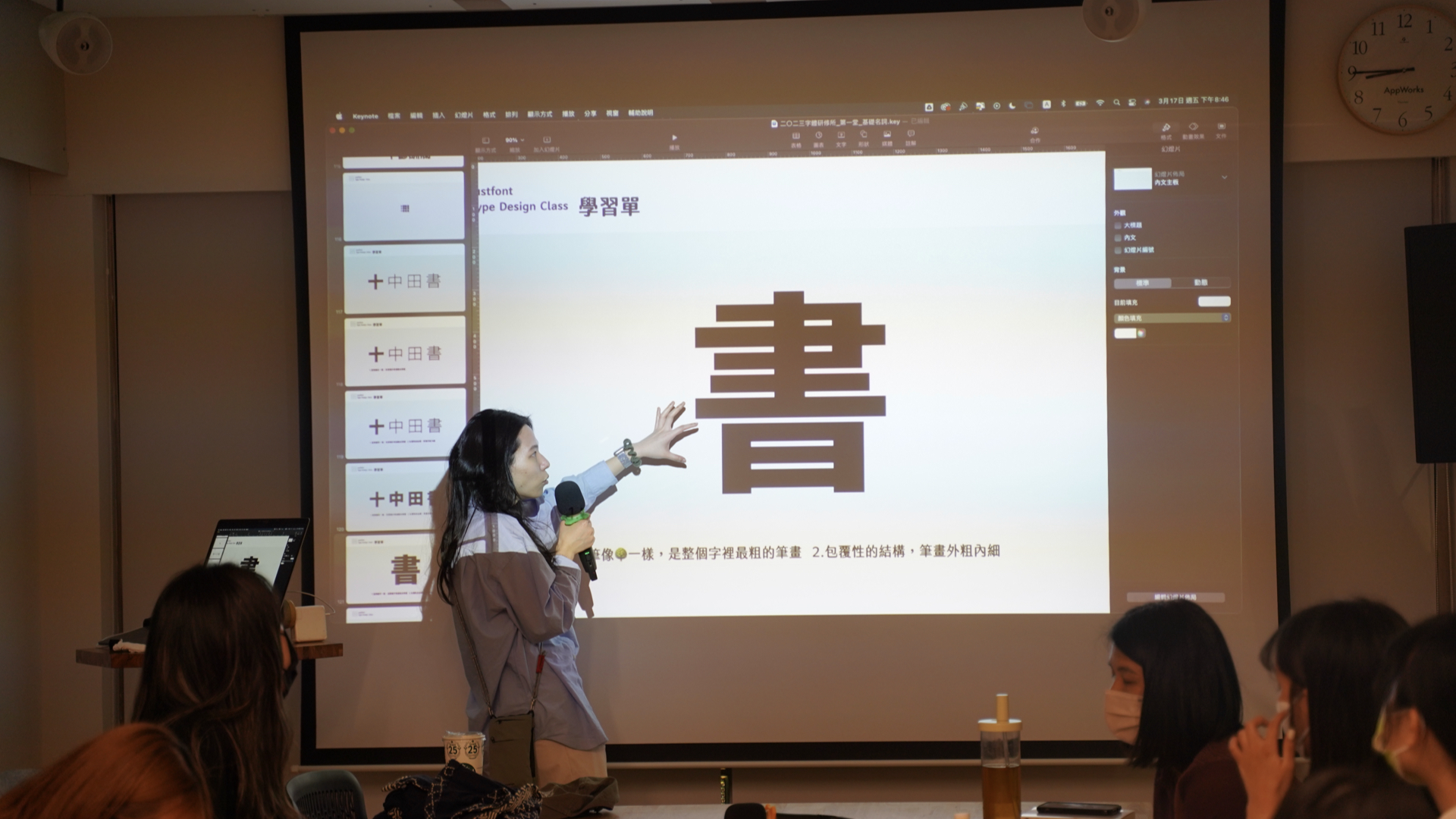
Held at least once each year with ten students per cohort, the course does not assume prior experience in type design. Its main audience is college students, graphic designers or illustrators wishing to develop their practice, and anyone who has never worked with Bézier curves before.
Advanced Course
The advanced course shifts from foundational technique to professional practice. Conducted in a seminar format across six months, it covers the historical development of letterforms and type design across contexts, giving students the conceptual grounding to develop work with genuine depth.
On the technical side, the course introduces Glyphs, covering advanced drawing techniques, quality control for outlines and stroke weight consistency, and workflow practices that meaningfully accelerate production.
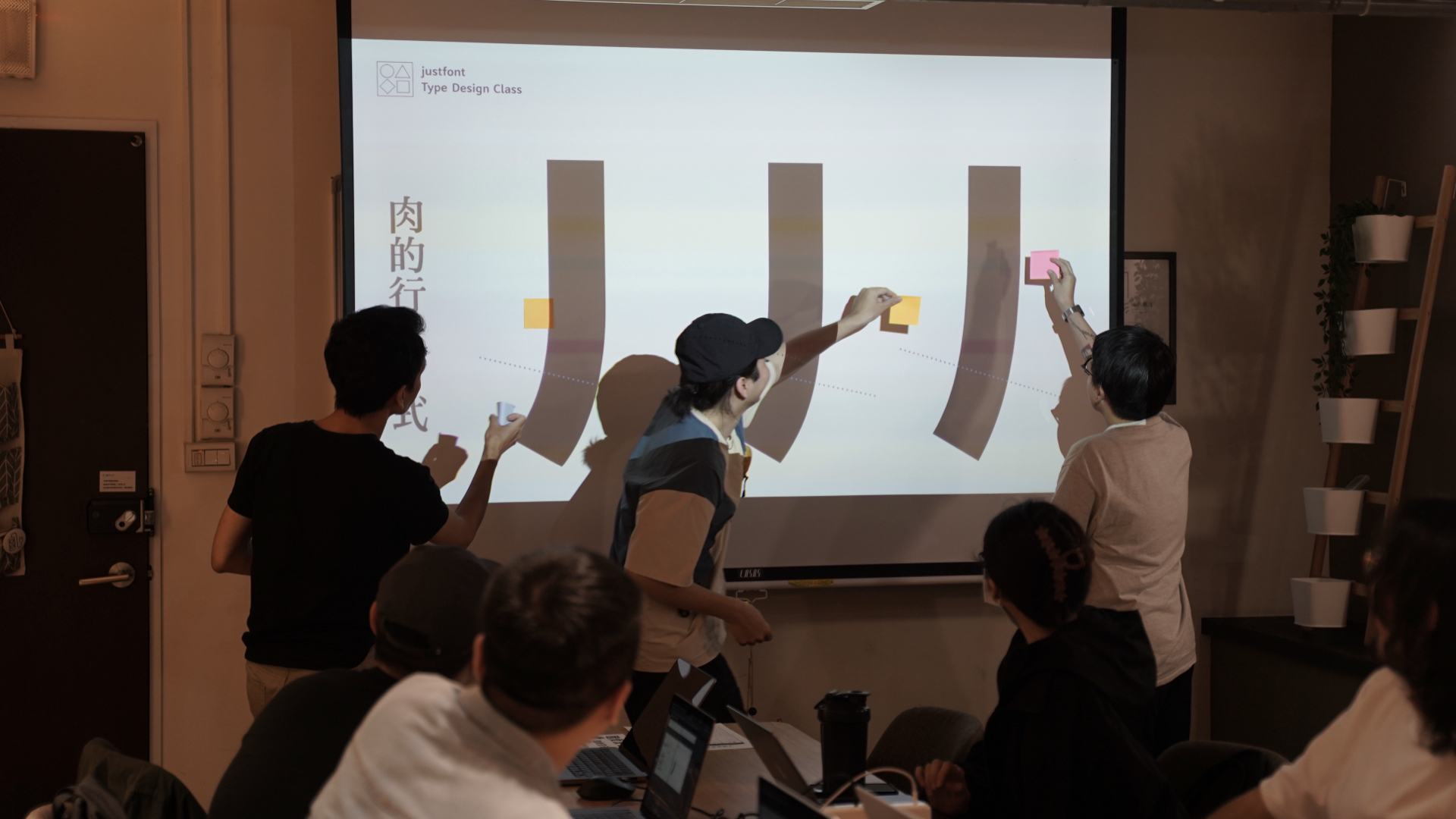
Students are expected to arrive with a typeface proposal of their own and a working knowledge equivalent to the foundation course. Over 12 hours of instruction across 6 months, students work toward a basic set of 50 core Chinese characters, in addition to Latin letters, numerals, punctuation, and Bopomofo, and professional-level proficiency in Glyphs.
In addition to these core courses, justfont occasionally offers instruction in Latin lettering, logotype design, and software workflow.
Community Program: What’z ur type?
Courses end. And when they do, most students find themselves without a community to stay connected to, and without a low-stakes space to continue practising.
What’z ur type? began as a response to this gap. Launched in 2022, it is a monthly creative challenge open to anyone with an interest in type—no background required, no standard to meet. Each month, a prompt is announced; participants make something with type and share it on Instagram.
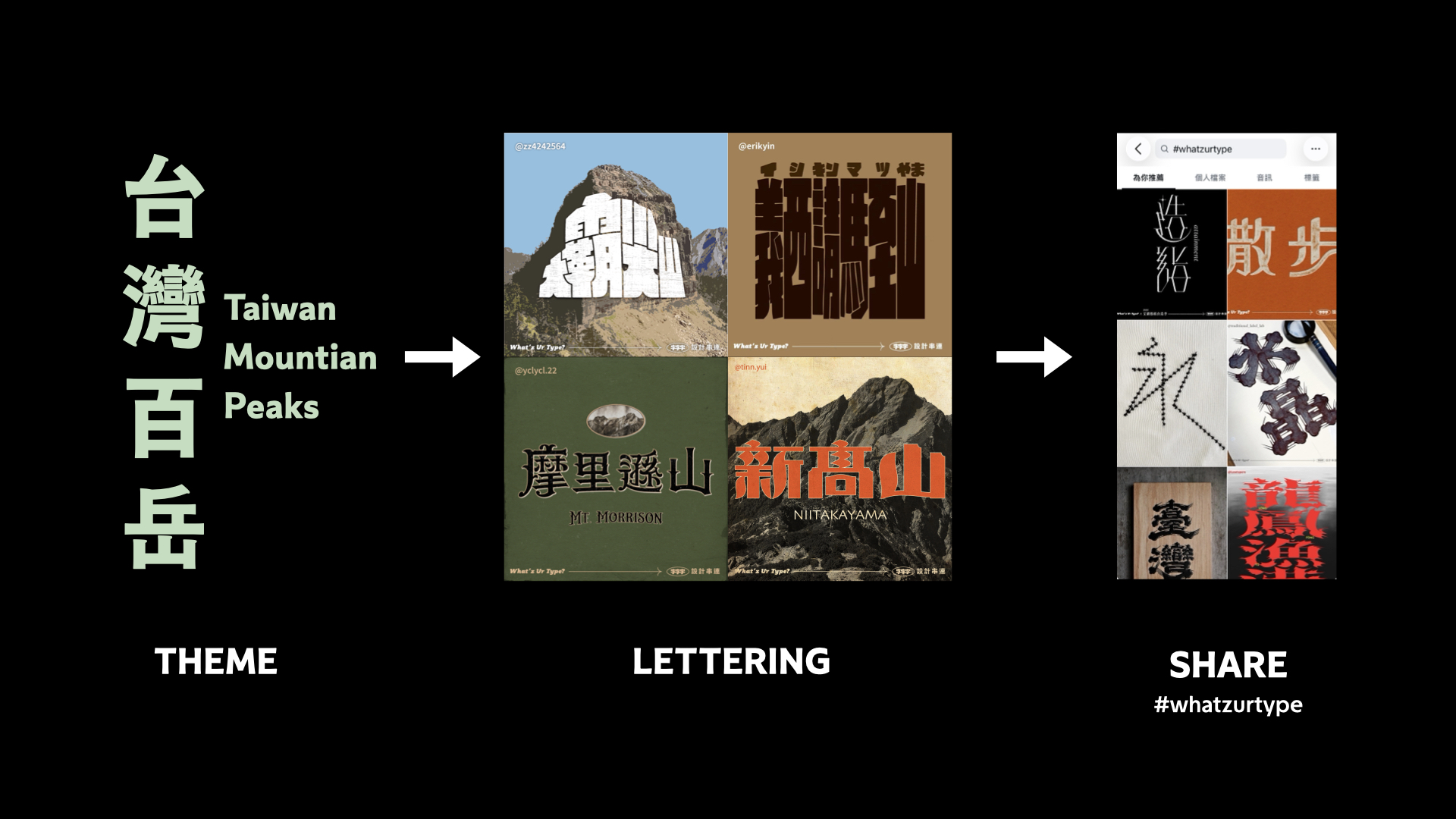
Prompts draw from landscape and nature, music and literature, retro design, tool and workflow challenges, and cross-script exploration between Latin and Hanzi. The range allows those with no background in type design to find a way into a prompt about their favourite song; someone with years of experience can find the same prompt technically demanding.
Around twenty submissions arrive each month, from students, hobbyists, working designers, and people who had never previously considered themselves part of a type community. Participation is not restricted to Taiwan; creators from Hong Kong and Japan have been consistent contributors since the project launched.
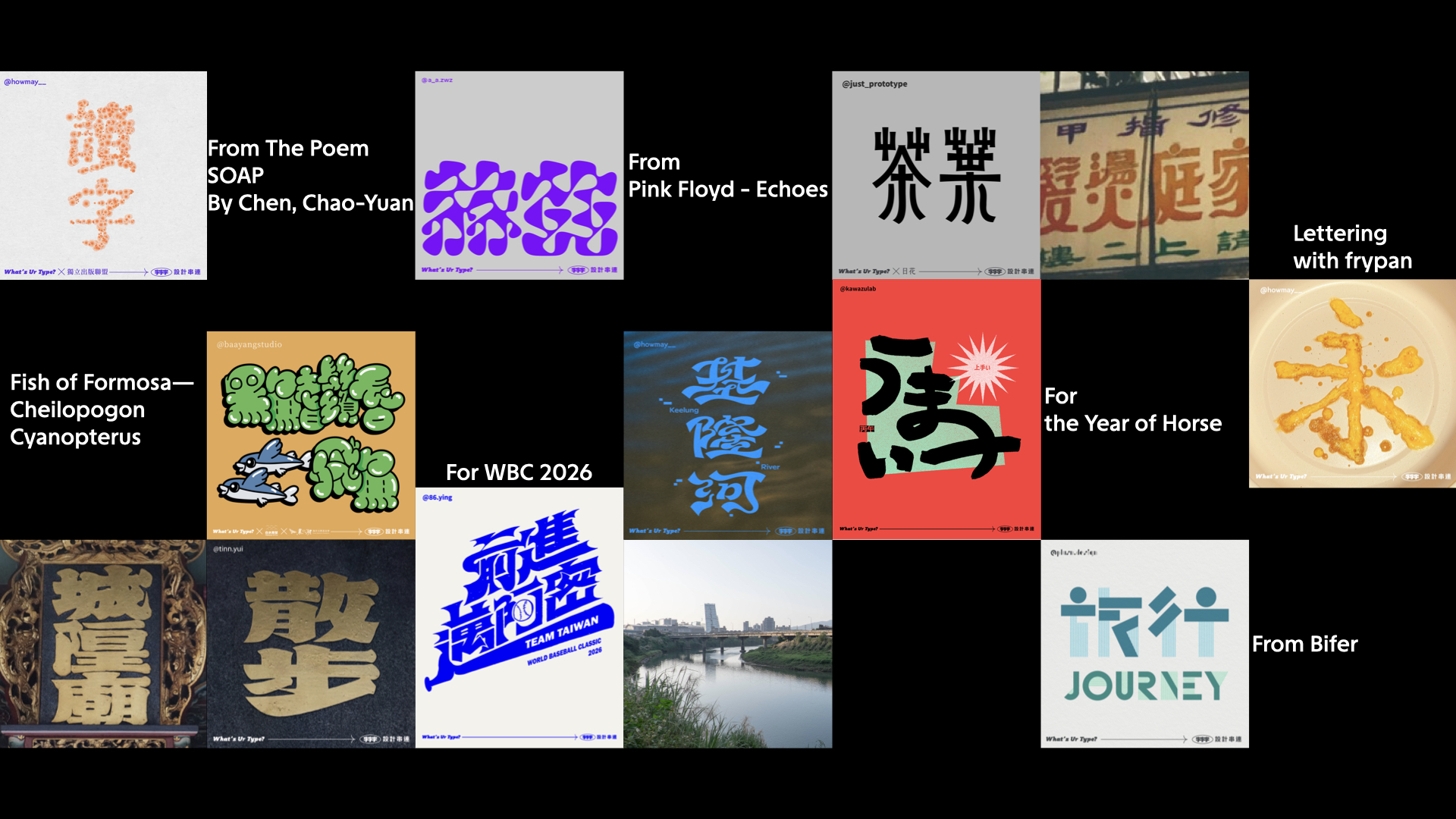
What’z ur type? was not designed to push participants toward becoming professional type designers. Its purpose is to give people somewhere to show up every month, so that an interest in type does not quietly disappear between other commitments.
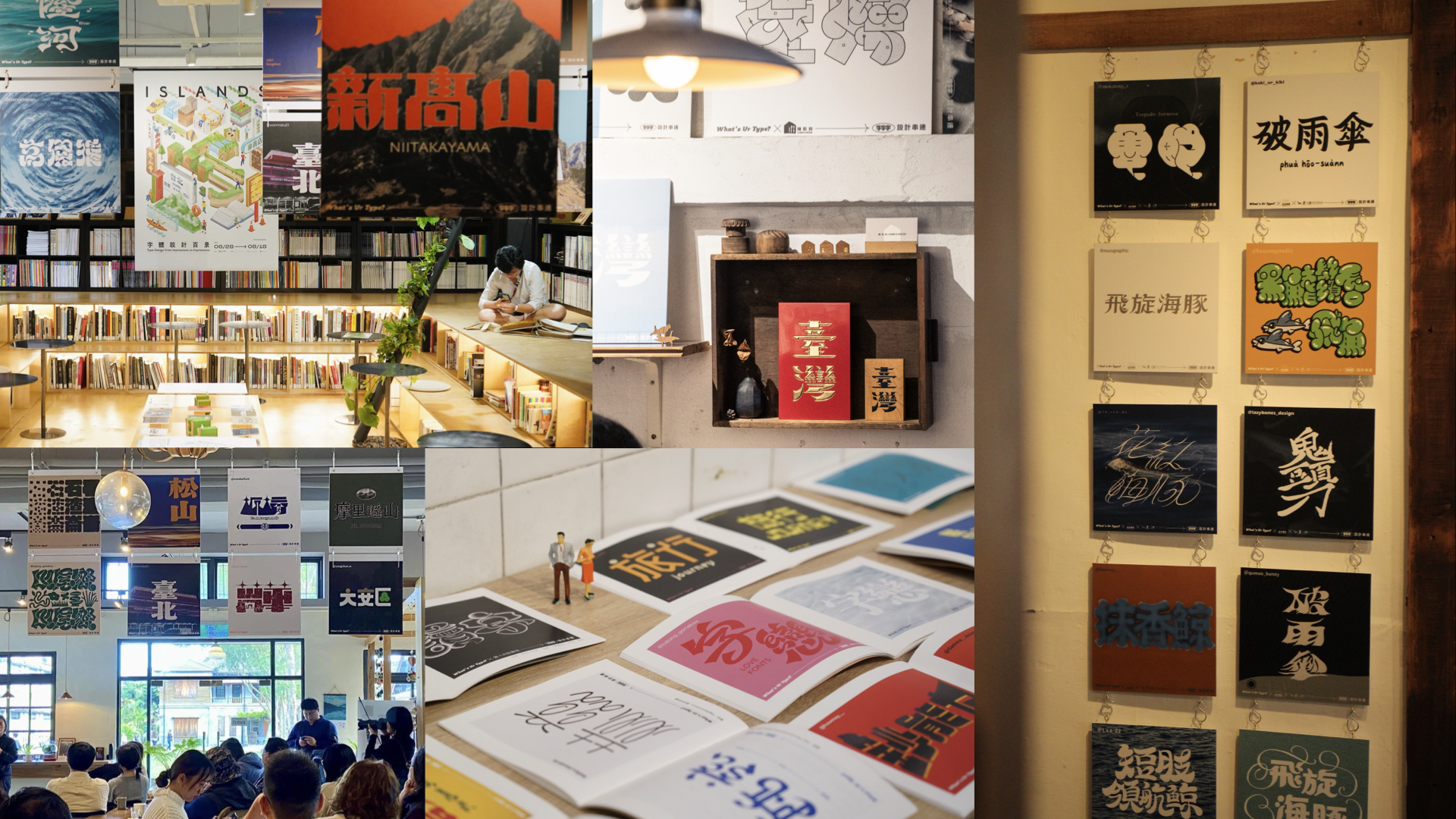
In 2024, three years of accumulated work were made into a series of exhibitions in libraries, bookstores, design shops, and traditional signage stores. One designer told us afterwards that seeing the show made them want to start making type again, after years of not touching it. Others said the community itself made them feel less alone.
The Door — Supporting Serious Practitioners
For those ready to commit to something more sustained, justfont runs two programs designed to support serious practitioners.
Encourager 造字鼓勵元: The Scholarship Program
To fill the gap where university design programs lack instruction in typeface design, the scholarship program Encourager 造字鼓勵元 gives students a structured opportunity to begin.
Now in its tenth year, the program has received over 500 submissions across its history. Each year, one recipient receives a nine-month mentorship, a scholarship stipend, an exhibition subsidy, a Glyphs licence, and regular office hours with justfont’s designers. Two honourable mentions and one concept award—introduced in recent years to recognise proposals that push beyond conventional typeface design—each include enrollment in justfont’s courses. All candidates who advance to the second round receive a certificate and a six-month Glyphs licence.
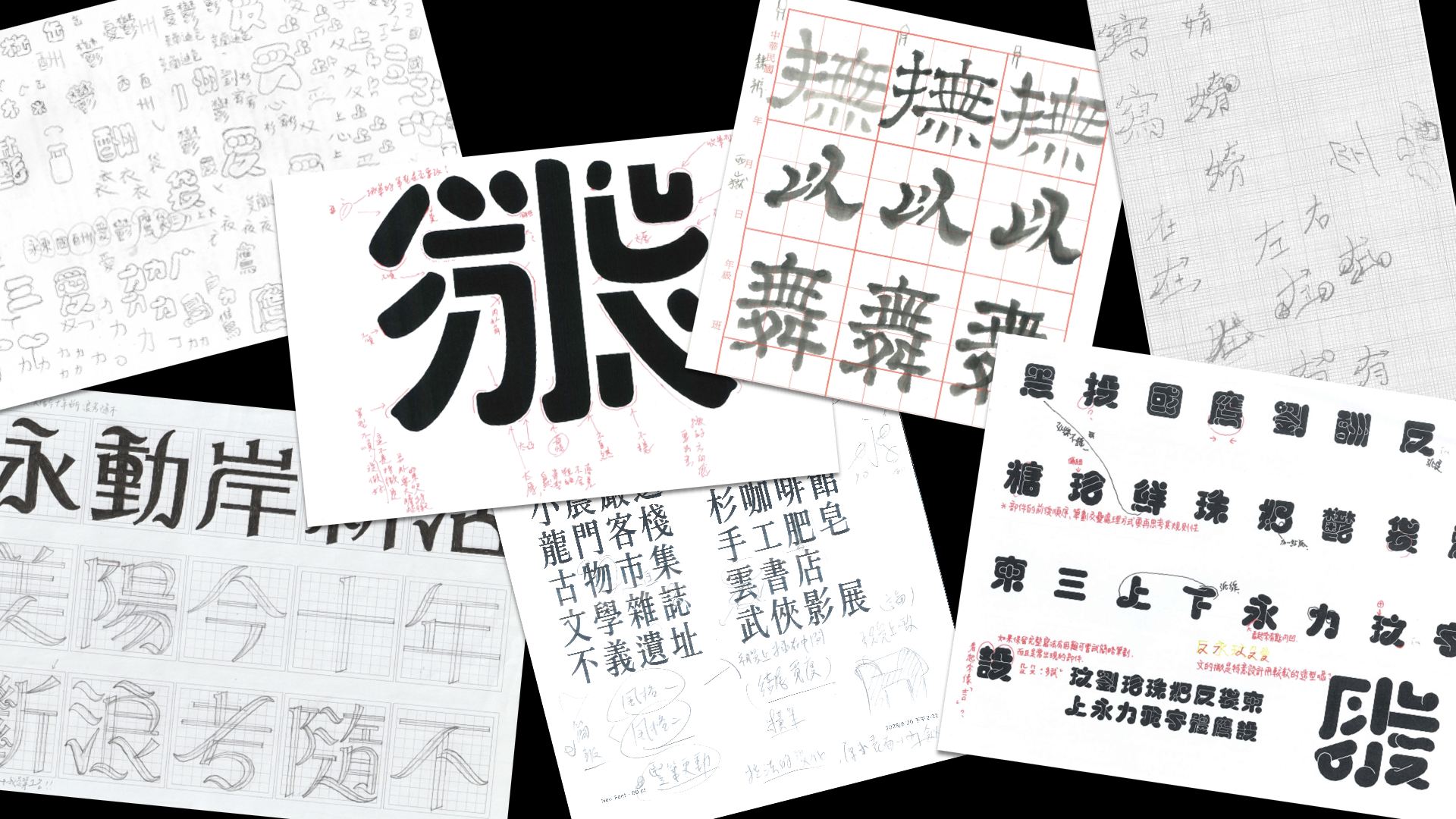
Selection takes place in two stages: a design proposal review, followed by an interview for shortlisted candidates. We evaluate three areas:
- Typeface proposal—concept, research, stylistic direction, and intended use
- Character and commitment—attitude, perseverance, and evidence of self-directed engagement with type
- Future planning—specifically, whether the applicant can realistically complete 200 glyphs in nine months alongside their other responsibilities
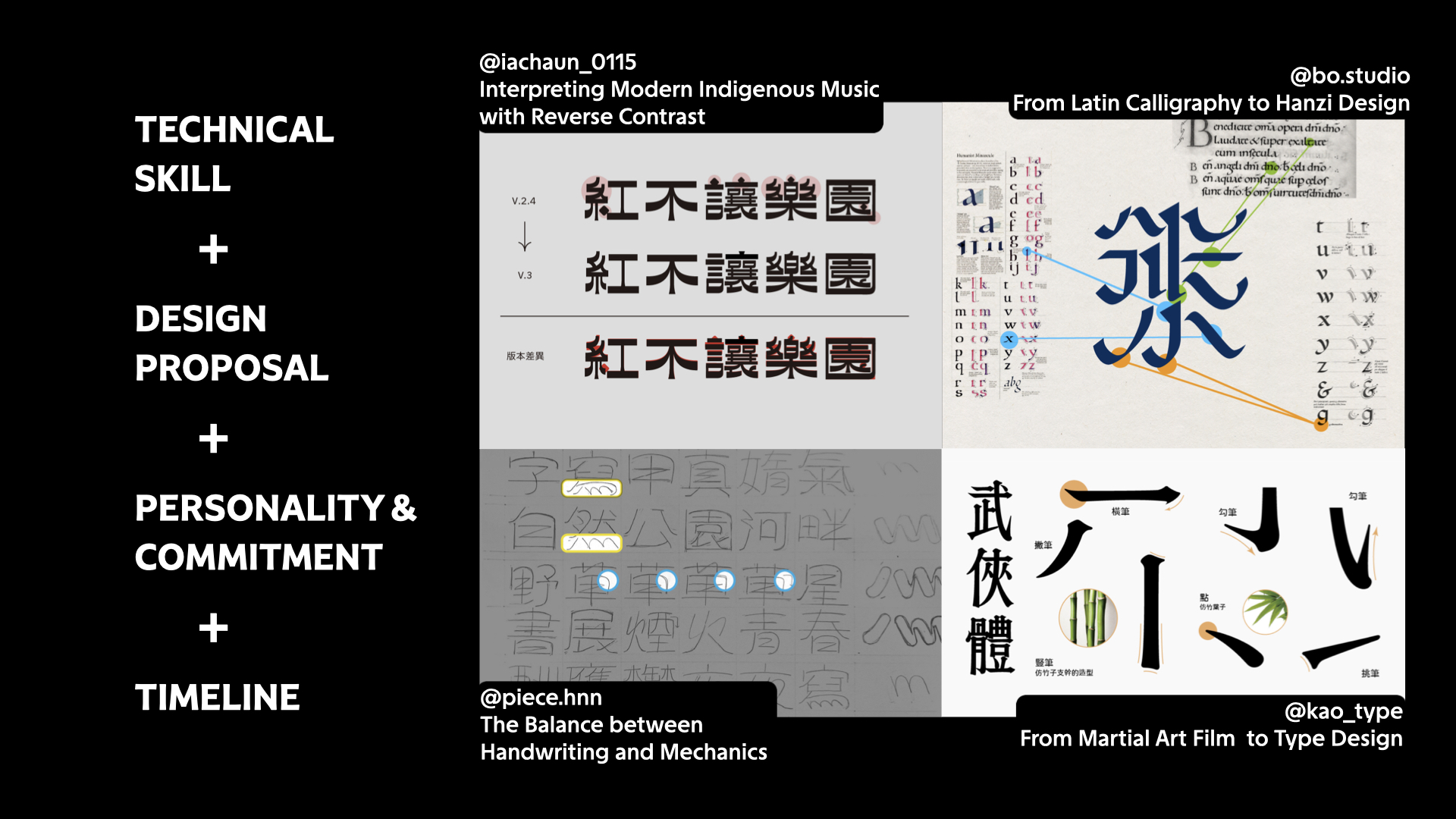
The judging panel is composed primarily of justfont’s staff. For the Concept Award, we invite type designers from outside Taiwan and graphic designers to bring perspectives beyond justfont’s immediate practice.
The mentorship is student-led, with no fixed curriculum or required check-in schedule. Some recipients update progress weekly; others work in longer cycles. The pace follows the person and the project. Over nine months, the recipient develops an initial concept of 200 glyphs. It is far from a complete typeface, but enough to establish the work’s structural logic and stylistic direction, and to give the student an honest encounter with what typeface design actually demands.
Outcomes vary. Some recipients go on to become independent type designers; others join justfont or continue in graphic design and teaching, carrying what they’ve learned into different practices.
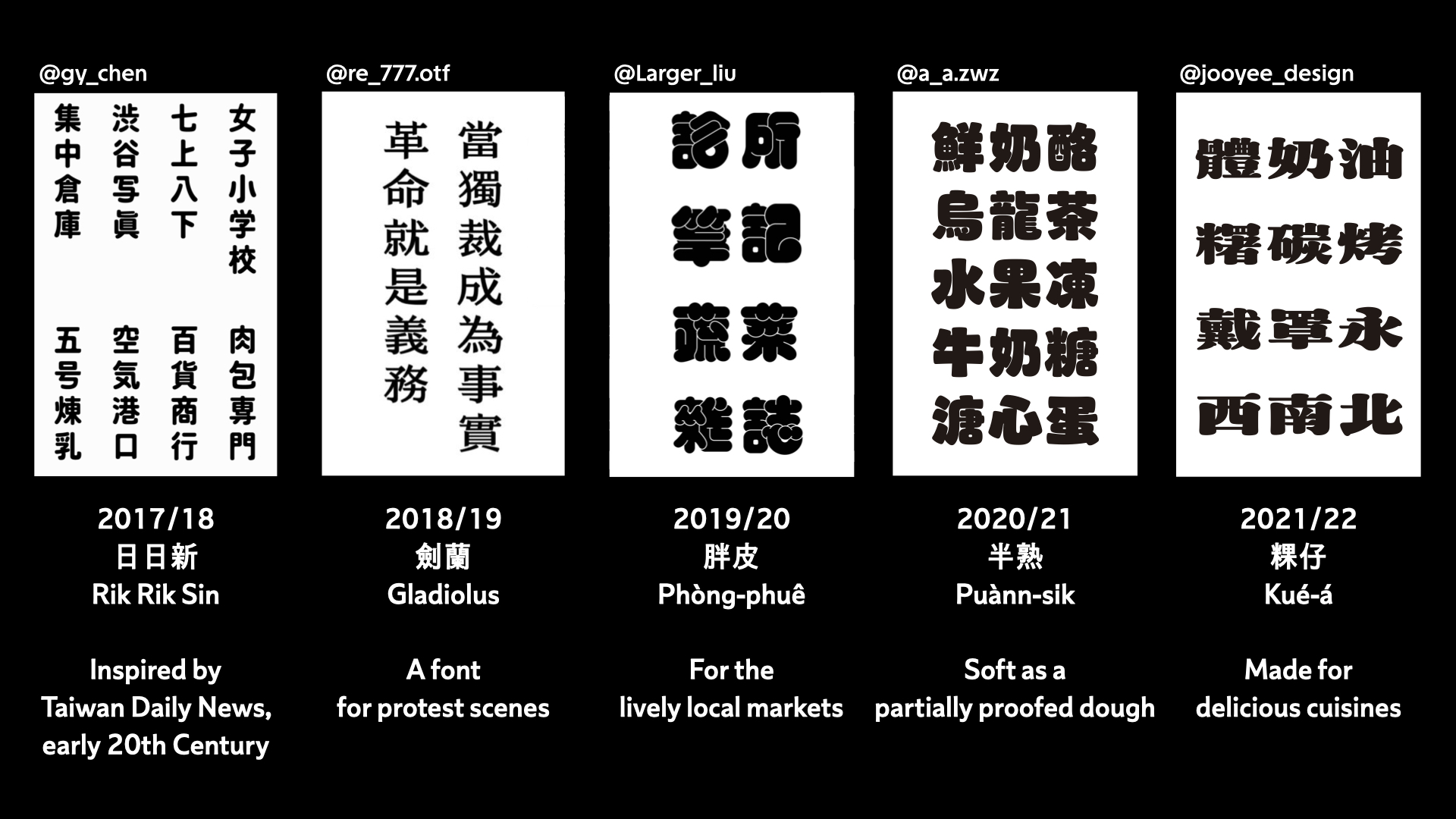
jf Friends 字友社: The Incubator Program
The incubator program began not as a formal program, but as a single collaboration. When justfont encountered a designer whose work and commitment warranted deeper support than a course or scholarship could offer, we worked out a structure together. That structure became the model for what is now the incubator.
The program supports designers through the full arc of developing and releasing a commercial typeface.
Financial support is structured in two phases. In the early stage, justfont provides direct support so that designers can work independently and complete between 7,000 and 14,000 glyphs without needing to take on other work to sustain themselves. In the later stage, this transitions to crowdfunding, which funds the completion of the project and tests market reception before general release.
Workspace is provided at justfont’s office, where designers can talk to people who share their experience at all times. Design guidance is available at every stage, from refining the concept to preparing production-ready files.
Visibility support covers the full scope of bringing a typeface to market, tailored to each designer and their work. Depending on the project, this may include developing a visual identity for the typeface, producing video advertising, managing campaigns, planning editorial content or interviews, coordinating with crowdfunding platforms, and shaping the narrative of the work—its name, its story, and how it is presented to an audience.
Up until 2026, five designers have completed the program, all of whom have released commercially successful typefaces through crowdfunding, collectively reaching thousands of backers. As Taiwan’s type landscape has grown and more designers are finding independent paths into the field, justfont is currently rethinking how the program operates and how it can support designers more sustainably.
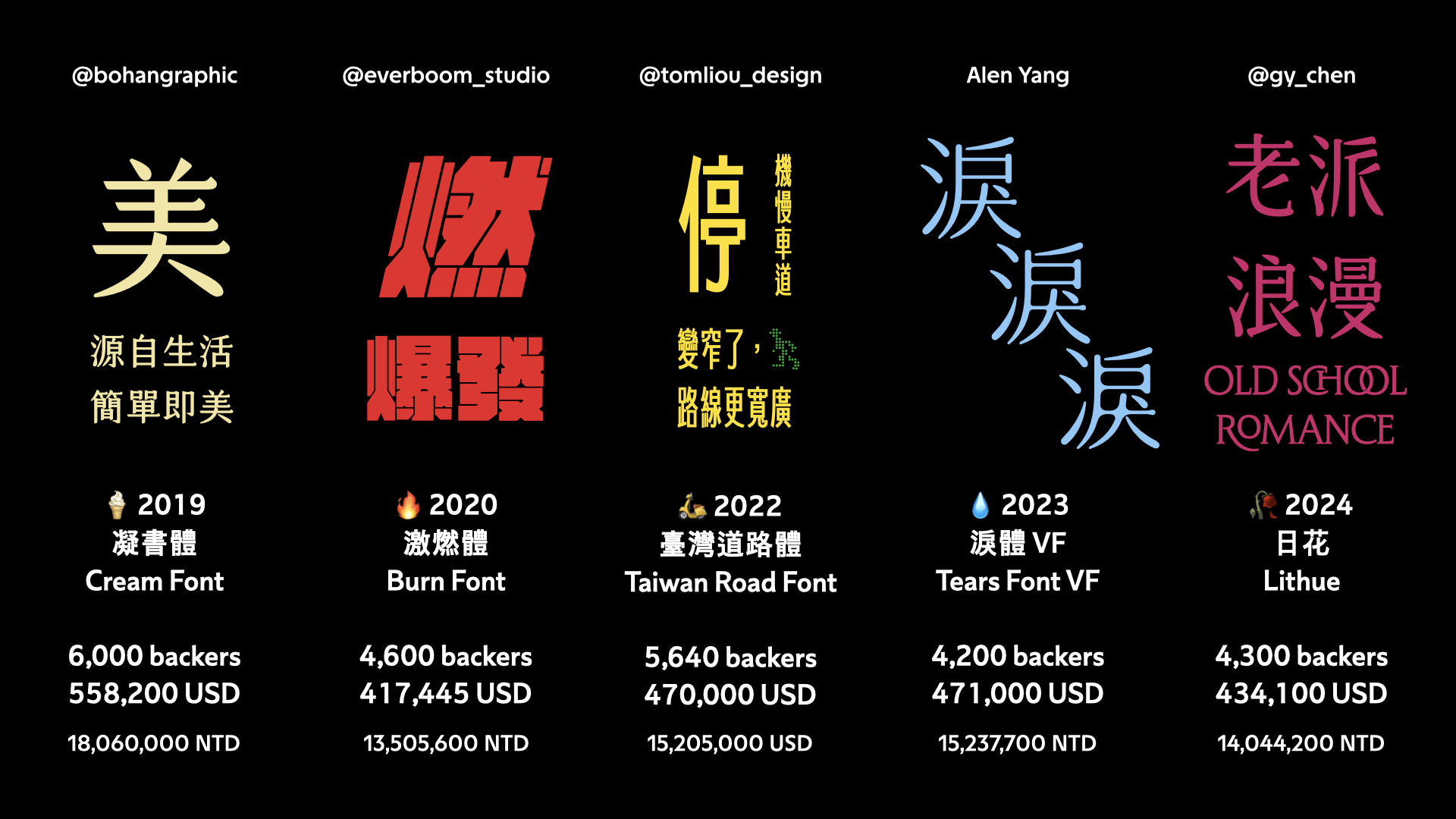
The Ecosystem
Every initiative described in this article addresses a different gap—in awareness, in practice, in access, in support. But they were not designed as a sequence to be completed in order. They are entry points. People arrive at different stages, stay for different lengths of time, and leave with different things. Some go on to become type designers. Most do not, and that was never the point.
What connects every stage is a shared premise: a healthy type design ecosystem requires people at every level of engagement. Those who learn to notice type build the audience. Those who buy fonts legitimately sustain the market. Those who take a course but never design a typeface become the clients who know what to ask for. Those who design typefaces need all of them to exist.
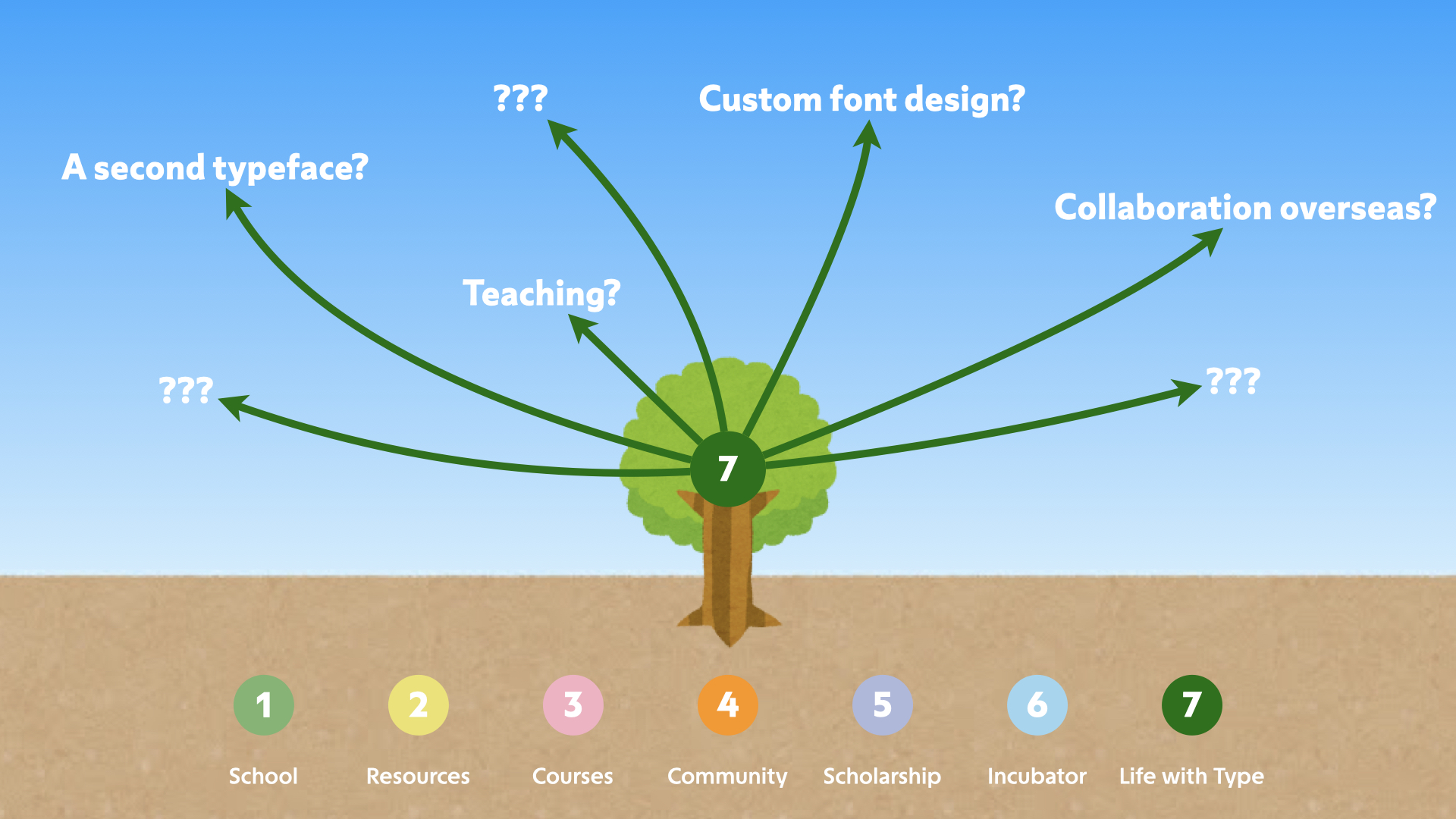
Ten years ago in Taiwan, almost none of this infrastructure existed. Today, students tell us there are so many resources available. We didn’t build this alone. The landscape changed because more people decided it mattered. We were part of it, and we’re still in it.
Learn More or Get Involved in Chinese Design
If you are learning Hanzi type design, looking for resources, or exploring how to bring type education into your own context, we may be able to help.
- Browse our educational resources (in Mandarin)
- Learn about Encourager 造字鼓勵元 (in Mandarin)
- Learn about jf Friends 字友社 (in Mandarin)
- Explore our courses (in Mandarin)
- Read our English blog
- Contact us: [email protected]